wk7 11.04/11.06: Digital Object | Digital Fabrication, Robotics | Automation
Give a brief response to any of the material covered in this week's presentations
wk7 11.04/11.06: Digital Object | Digital Fabrication, Robotics | Automation
-
ericmrennie
- Posts: 9
- Joined: Wed Oct 01, 2025 2:33 pm
Re: wk7 11.04/11.06: Digital Object | Digital Fabrication, Robotics | Automation
I’ve always been captivated by how architecture intersects emerging media and digital fabrication. Together, they offer new ways to make our surroundings dynamic and expressive. For as long as civilization has existed, we’ve created landmarks that define us, like the Great Pyramids, the Colosseum, cathedrals, and the Empire State Building. Today, modern technology gives us the tools to continue that legacy in new forms. Why limit ourselves to four walls and a roof when we can shape experiences through design?
One artist whose work embodies this intersection of art, architecture, and technology is Erwin Hauer. Erwin Hauer was an Austrian-born sculptor who created modular sculptures with infinite continuous surfaces. Some of his structures were used within architecture as room dividers or light-diffusing walls (Hauer, “Erwin Hauer – Spinneybeck”). His work consists of elements of infinity, continuity, and periodic repetition and encompasses material science, 3D design, computer-aided manufacturing, and advanced fabrication technologies (Hauer).
An example of Erwin Hauer's light-diffusing walls
Another artist who utilizes advanced fabrication techniques is Nicolas Baier, a Canadian visual artist. Starting in the 2000s, Baier began creating works that integrate art and architecture (“Baier, Nicolas”). Very notably is his “Mappemonde” piece, which consists of 208 pieces of marble carved by machine and assembled to make a 15.6 by 8.2 meter mural that resembles roots or intertwining roads (Baier, “Portfolio > Mappemonde”). The marble is etched and placed in such a way that it looks like it was excavated, not assembled.
"Mappemonde" by Nicolas Baier
Integrating art and architecture in a different sense is Stanza, an artist based in London who created “The Nemesis Machine.” Fusing together electronic components, such as sensors, cameras, robotics, and computers, Stanza builds city-like structures that demonstrate the control technology has on humanity and how complicit and entangled civilization has become in a panopticon through modern technology (Stanza).
"The Nemesis Machine" by Stanza
Works Cited
“Baier, Nicolas.” Blouin Division – Artists. Blouin Division, https://www.blouin-division.com/en/arti ... aier#about. Accessed 5 Nov. 2025.
Baier, Nicolas. “Portfolio > Mappemonde.” Nicolas Baier, https://nicolasbaier.com/portfolio/mappemonde/. Accessed 5 Nov. 2025.
Hauer, Erwin. “About.” Erwin Hauer, https://www.erwinhauer.com/about. Accessed 5 Nov. 2025.
Hauer, Erwin. “Erwin Hauer – Spinneybeck.” Spinneybeck, https://www.spinneybeck.com/designers/view/erwin-hauer. Accessed 5 Nov. 2025.
Stanza. “About / Dr Stanza.” Stanza, https://www.stanza.co.uk/about/index.html. Accessed 5 Nov. 2025.
One artist whose work embodies this intersection of art, architecture, and technology is Erwin Hauer. Erwin Hauer was an Austrian-born sculptor who created modular sculptures with infinite continuous surfaces. Some of his structures were used within architecture as room dividers or light-diffusing walls (Hauer, “Erwin Hauer – Spinneybeck”). His work consists of elements of infinity, continuity, and periodic repetition and encompasses material science, 3D design, computer-aided manufacturing, and advanced fabrication technologies (Hauer).
- Screenshot 2025-11-05 at 7.18.42 PM.png (49.76 KiB) Viewed 2522 times
Another artist who utilizes advanced fabrication techniques is Nicolas Baier, a Canadian visual artist. Starting in the 2000s, Baier began creating works that integrate art and architecture (“Baier, Nicolas”). Very notably is his “Mappemonde” piece, which consists of 208 pieces of marble carved by machine and assembled to make a 15.6 by 8.2 meter mural that resembles roots or intertwining roads (Baier, “Portfolio > Mappemonde”). The marble is etched and placed in such a way that it looks like it was excavated, not assembled.
- Screenshot 2025-11-05 at 7.20.38 PM.png (43.82 KiB) Viewed 2522 times
Integrating art and architecture in a different sense is Stanza, an artist based in London who created “The Nemesis Machine.” Fusing together electronic components, such as sensors, cameras, robotics, and computers, Stanza builds city-like structures that demonstrate the control technology has on humanity and how complicit and entangled civilization has become in a panopticon through modern technology (Stanza).
- Screenshot 2025-11-05 at 7.21.34 PM.jpeg (12.62 KiB) Viewed 2522 times
Works Cited
“Baier, Nicolas.” Blouin Division – Artists. Blouin Division, https://www.blouin-division.com/en/arti ... aier#about. Accessed 5 Nov. 2025.
Baier, Nicolas. “Portfolio > Mappemonde.” Nicolas Baier, https://nicolasbaier.com/portfolio/mappemonde/. Accessed 5 Nov. 2025.
Hauer, Erwin. “About.” Erwin Hauer, https://www.erwinhauer.com/about. Accessed 5 Nov. 2025.
Hauer, Erwin. “Erwin Hauer – Spinneybeck.” Spinneybeck, https://www.spinneybeck.com/designers/view/erwin-hauer. Accessed 5 Nov. 2025.
Stanza. “About / Dr Stanza.” Stanza, https://www.stanza.co.uk/about/index.html. Accessed 5 Nov. 2025.
-
shashank86
- Posts: 9
- Joined: Wed Oct 01, 2025 2:36 pm
Re: wk7 11.04/11.06: Digital Object | Digital Fabrication, Robotics | Automation
1. Stanza’s Works
Stanza’s systems feel alive in a very real way. I like how he takes data from the city or the environment and turns it into something visual and meaningful instead of just numbers. His pieces feel balanced because the tech, the visuals, and the idea all support each other. Nothing feels extra or forced. It is clear he knows exactly what the work is trying to say, and that clarity shows up in how calm and complete the final output feels.
2. MX3D Bridge
The MX3D Bridge is one of those projects where engineering and art meet perfectly. It is designed through rules and robotic metal printing, but the result feels almost organic. I enjoy how purposeful it looks. It is strong, functional, and still beautiful. The whole project feels like it reached a natural equilibrium where the concept, the structure, and the process all align. It also shows what happens when a system is built with full understanding of what it wants to become.
3. The Next Rembrandt
This project impressed me because it shows how a machine can learn the logic behind an artist’s style without losing the emotion of it. It is not copying blindly. It actually feels like it understands why Rembrandt made certain choices. The output feels intentional, not random. I like this balance of analysis and expression. It shows that when the idea is clear, the technology can behave with purpose and still create something that feels human.
4. Realm of Silk by Sougwen Chung
What I liked about this piece is how everything feels tightly held together. The visuals and timing work with each other instead of fighting for attention. It is simple in the best way, because the intention is clear. You can feel the system behind it, but it does not distract you. It lets you understand the rhythm and structure naturally. That balance makes the work feel complete and meaningful without trying too hard.
2. MX3D Bridge
3. The Next Rembrandt
4. Realm of Silk by Sougwen Chung
-
jintongyang
- Posts: 9
- Joined: Wed Oct 01, 2025 2:38 pm
Re: wk7 11.04/11.06: Digital Object | Digital Fabrication, Robotics | Automation
One of my main interests is how designers take inspiration from nature to create “organic” forms. In design, organic usually means shapes or structures that feel natural (fluid, irregular, asymmetrical, or evolving) rather than geometric or mechanical. This idea has always been a challenge for artists and designers, but today the boundary between the natural and the artificial has become much more blurred. With new technologies, patterns and materials inspired by nature can now be translated more directly into physical, tangible objects. This creates exciting opportunities for future interactions between biological systems and digital fabrication.
The Kinematic Dress (2014) by Nervous System Studio (fig.1) is a great example of this. The dress is generated from a body scan and 3D-printed in one piece with no assembly required. The organic pattern and the smart folding strategy make it both functional and visually interesting. Similarly, Iris van Herpen’s fashion work combines 3D printing and high-end couture techniques. Many of her collections draw from natural forces, such as water, sound waves, or cellular structures, and turn them into wearable forms (fig.2). From her work (https://www.irisvanherpen.com/), I see great potential for future digital fabrication in fields closely related to our everyday lives.

Fig.1. Kinematic Dress (2014) by Nervous System Studio

Fig.2. The collection of HYPNOSIS by Iris van Herpen
On a different scale, the Silk Pavilion I (2013) from MIT Media Lab (fig.3) explores a more direct collaboration between nature and machines. The structure is created by both a robot and thousands of silkworms. Instead of only imitating biology, the project lets the organisms themselves become the builders. By adjusting light, temperature, and other environmental conditions, the team guided the silkworms’ behavior to spin silk in specific ways. This blending of biological behavior and robotic design feels like a new kind of “environmental algorithm.”
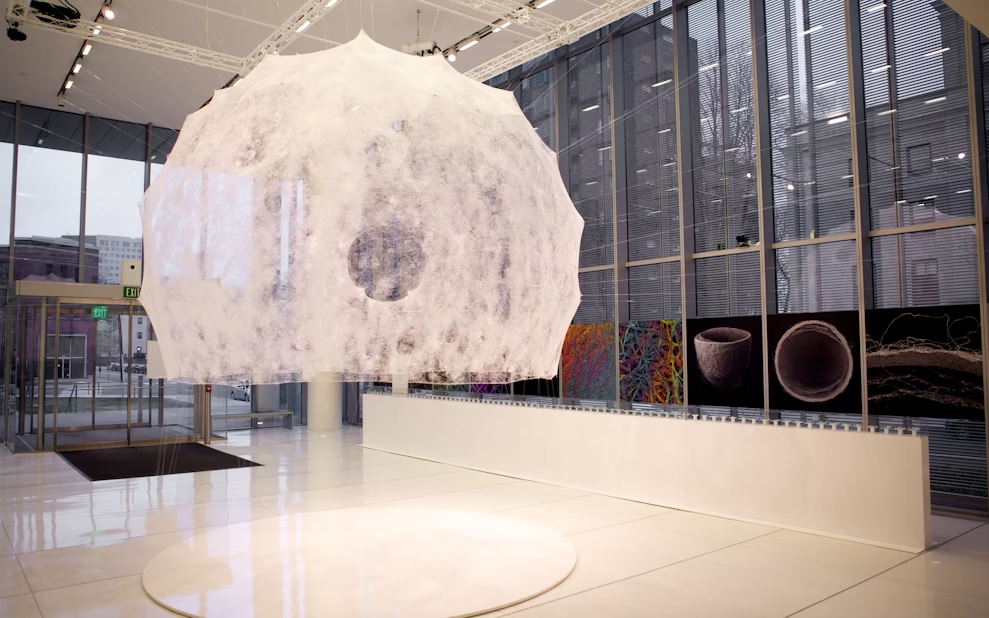
Fig.3. Silk Pavilion I (2013) from MIT Media Lab
Sougwen Chung’s Realm of Silk (2023) (fig.4) also works with silkworm-inspired ideas, but in the context of performance. I’m especially interested in how the piece brings together human drawing, robotic movement, and live music. The theme of transformation and metamorphosis gives the work an organic rhythm that feels both natural and technological at the same time.
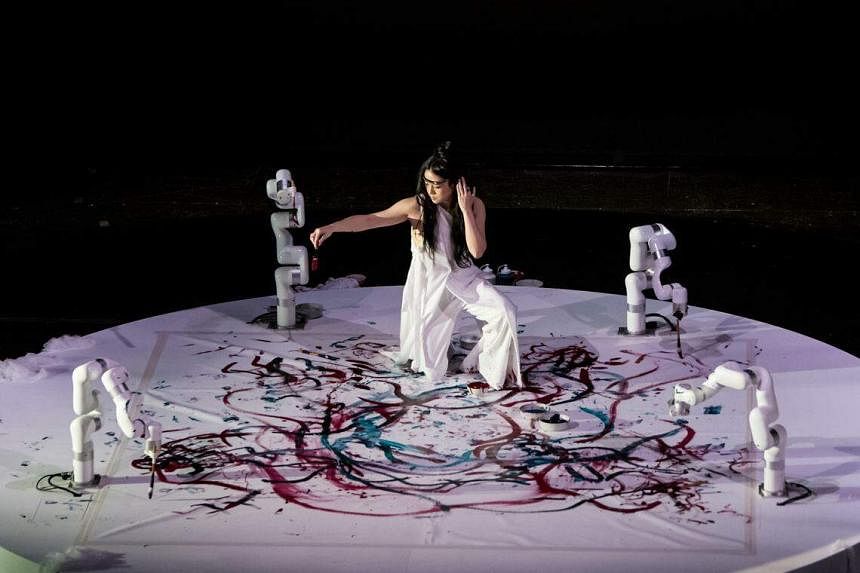
Fig.4. Realm of Silk (2023) by Sougwen Chung
Overall, I think modern technology has expanded what “organic” can mean in design. By combining natural processes with digital tools, artists can explore new materials, new forms, and new ways of collaborating with both machines and living systems.
The Kinematic Dress (2014) by Nervous System Studio (fig.1) is a great example of this. The dress is generated from a body scan and 3D-printed in one piece with no assembly required. The organic pattern and the smart folding strategy make it both functional and visually interesting. Similarly, Iris van Herpen’s fashion work combines 3D printing and high-end couture techniques. Many of her collections draw from natural forces, such as water, sound waves, or cellular structures, and turn them into wearable forms (fig.2). From her work (https://www.irisvanherpen.com/), I see great potential for future digital fabrication in fields closely related to our everyday lives.
Fig.1. Kinematic Dress (2014) by Nervous System Studio
Fig.2. The collection of HYPNOSIS by Iris van Herpen
On a different scale, the Silk Pavilion I (2013) from MIT Media Lab (fig.3) explores a more direct collaboration between nature and machines. The structure is created by both a robot and thousands of silkworms. Instead of only imitating biology, the project lets the organisms themselves become the builders. By adjusting light, temperature, and other environmental conditions, the team guided the silkworms’ behavior to spin silk in specific ways. This blending of biological behavior and robotic design feels like a new kind of “environmental algorithm.”
Fig.3. Silk Pavilion I (2013) from MIT Media Lab
Sougwen Chung’s Realm of Silk (2023) (fig.4) also works with silkworm-inspired ideas, but in the context of performance. I’m especially interested in how the piece brings together human drawing, robotic movement, and live music. The theme of transformation and metamorphosis gives the work an organic rhythm that feels both natural and technological at the same time.
Fig.4. Realm of Silk (2023) by Sougwen Chung
Overall, I think modern technology has expanded what “organic” can mean in design. By combining natural processes with digital tools, artists can explore new materials, new forms, and new ways of collaborating with both machines and living systems.
Last edited by jintongyang on Mon Nov 24, 2025 12:13 am, edited 2 times in total.
Re: wk7 11.04/11.06: Digital Object | Digital Fabrication, Robotics | Automation
MX3D Bridge—Boris Laarman Lab and Arup
One thing that really caught my attention about the MX3D printed bridge is the idea that the bridge isn’t just a structure. It’s basically a living digital object. it has all these sensors measuring vibration, strain, and even air quality, which makes it feel way more “alive” than a normal sculpture or design piece. Another point I found interesting is the digital twin part. The idea that the physical bridge has a virtual version constantly updating itself kind of blurs the line between architecture and software. It made me think that digital fabrication isn’t only about 3D printing cool shapes—it’s also about how the object continues to exist digitally after it’s built. The bridge becomes both a sculpture in real space and a dataset at the same time.
Robotic Chair- 2006
After watching Robotic Chair, I realized how unusual its use of automation is. Instead of doing something efficient or helpful, the chair just falls apart and slowly puts itself back together. Watching a machine perform something so unreliable and almost “emotional” feels different from the usual idea of robots being precise and goal-oriented. What really stayed with me is how it uses a vision system to look for its own scattered pieces and reassemble itself, almost like it’s trying to recover.
Realm of Silk(2023)—-Sougwen Chung
This work made me rethink what robotics and machine vision can actually do. The part that really surprised me was how their robot reacts not only to the lines they paint, but also to their brainwave activity. When Chung enters a calm, meditative flow state, the robot becomes more active, almost as if it can sense that shift. The system responds to something completely internal and invisible. It made the robot feel less like a tool and more like an extension of the artist’s mood or energy, which is a very different way of understanding robotics.
One thing that really caught my attention about the MX3D printed bridge is the idea that the bridge isn’t just a structure. It’s basically a living digital object. it has all these sensors measuring vibration, strain, and even air quality, which makes it feel way more “alive” than a normal sculpture or design piece. Another point I found interesting is the digital twin part. The idea that the physical bridge has a virtual version constantly updating itself kind of blurs the line between architecture and software. It made me think that digital fabrication isn’t only about 3D printing cool shapes—it’s also about how the object continues to exist digitally after it’s built. The bridge becomes both a sculpture in real space and a dataset at the same time.
After watching Robotic Chair, I realized how unusual its use of automation is. Instead of doing something efficient or helpful, the chair just falls apart and slowly puts itself back together. Watching a machine perform something so unreliable and almost “emotional” feels different from the usual idea of robots being precise and goal-oriented. What really stayed with me is how it uses a vision system to look for its own scattered pieces and reassemble itself, almost like it’s trying to recover.
This work made me rethink what robotics and machine vision can actually do. The part that really surprised me was how their robot reacts not only to the lines they paint, but also to their brainwave activity. When Chung enters a calm, meditative flow state, the robot becomes more active, almost as if it can sense that shift. The system responds to something completely internal and invisible. It made the robot feel less like a tool and more like an extension of the artist’s mood or energy, which is a very different way of understanding robotics.
Re: wk7 11.04/11.06: Digital Object | Digital Fabrication, Robotics | Automation
I like it when artists play with perception in their works. Out of this week's works, two of them caught my attention in this regard: Masaki Fujihata's "Private Room" and Alan Rath's deconstructed body parts on screens.
"Private Room" reminded me of the artist we looked at in the previous weeks that used a small amount of pixels to display videos (it was mostly swimmers I believe) on surfaces. It shows that even with vague silhouettes, as long as enough information about the lights and shadows are present. Our brains already have enough mental representations about the movement and visuals that we can mostly guess what the actual video looks like. For "Private Room" it's not as clear, since the artist only used rod-shaped lights. In the video there were also the actual videos playing next to the light installation which made it easier to compare.

Alan Rath's works in the links https://www.brycewolkowitz.com/h/artist ... ?a=17&g=37 and https://www.youtube.com/watch?v=gjYWIrbRDtw are like anthropomorphised systems that vaguely resemble faces and arms. The eye and nose pieces also remind me of Lady Cassandra from Doctor Who (image below)

In these works as well, our brain perceives the installation as "arms" due to the choreographed movements of their robotic joints that resemble a human arm.

I find that when we see something that feels familiar we tend to be more engaged as the audience. Because these robotic arms are moving as if they are dancing, it helps maintain the attention on itself.
"Private Room" reminded me of the artist we looked at in the previous weeks that used a small amount of pixels to display videos (it was mostly swimmers I believe) on surfaces. It shows that even with vague silhouettes, as long as enough information about the lights and shadows are present. Our brains already have enough mental representations about the movement and visuals that we can mostly guess what the actual video looks like. For "Private Room" it's not as clear, since the artist only used rod-shaped lights. In the video there were also the actual videos playing next to the light installation which made it easier to compare.
Alan Rath's works in the links https://www.brycewolkowitz.com/h/artist ... ?a=17&g=37 and https://www.youtube.com/watch?v=gjYWIrbRDtw are like anthropomorphised systems that vaguely resemble faces and arms. The eye and nose pieces also remind me of Lady Cassandra from Doctor Who (image below)
In these works as well, our brain perceives the installation as "arms" due to the choreographed movements of their robotic joints that resemble a human arm.
I find that when we see something that feels familiar we tend to be more engaged as the audience. Because these robotic arms are moving as if they are dancing, it helps maintain the attention on itself.
-
firving-beck
- Posts: 8
- Joined: Wed Oct 01, 2025 2:26 pm
Re: wk7 11.04/11.06: Digital Object | Digital Fabrication, Robotics | Automation
I was particularly interested in works where human and machine combine. I believe that these pieces both extend the capabilities of and simultaneously limit the human form.
For example, Stelarc’s robotic pieces that physically fuse with his body. I found Exoskeleton to be a really unique example of this. The form both appears naturalistic (described as "human-like) and uncomfortable to operate. Both furthers the abilities of physical form -- rotating around an axis is enabled, as is an extended left arm with pneumatic manipulator having 11 degrees of freedom. However, though he controls the machine's movement through gesture, Stelarc's actual body is subject to the physical constraints of the surrounding metal.
Systems Maintenance is also an example of this. In this piece, gallery participants manipulate the arrangement of furniture in a room. Participants are both inside the room and looking down upon it, so that the projection itself becomes another world. I would argue that it being able to inhabit a space, view it from above, and interface with elements expands human perspective. Systems Maintenance transcends traditional spatial limitations. However, viewers are privy to the additional "rules" that govern the space. For example, which version of the room you are looking at is uncertain until interaction occurs.
For example, Stelarc’s robotic pieces that physically fuse with his body. I found Exoskeleton to be a really unique example of this. The form both appears naturalistic (described as "human-like) and uncomfortable to operate. Both furthers the abilities of physical form -- rotating around an axis is enabled, as is an extended left arm with pneumatic manipulator having 11 degrees of freedom. However, though he controls the machine's movement through gesture, Stelarc's actual body is subject to the physical constraints of the surrounding metal.
- Exoskeleton (Stelarc)
- Systems Maintenance (Perry Hoberman)
Re: wk7 11.04/11.06: Digital Object | Digital Fabrication, Robotics | Automation
The Robotic Chair is a kinetic sculpture modeled after a wooden chair that repeatedly breaks apart and reassembles itself. Using an internal system of mechanical components and computer vision, the chair autonomously disassembles and reconstructs without any human assistance. This continuous cycle evokes the myth of Sisyphus and metaphorically reflects the repetitive and persistent processes found in human life.

Figure 1. Robotic Chair, A kinetic sculpture by Raffaello D’Andrea, Max Dean, and Matt Donovan.
One of the artists of the Robotic Chair, Raffaello D’Andrea, is known for producing experimental artworks that draw on robotics, control theory, and artificial intelligence. Another significant kinetic work by D’Andrea is Cubli, a small cube-shaped sculpture that maintains balance on one of its edges or corners through precise mechanical motion. Cubli demonstrates how a highly refined control system can regulate gravity and gyroscopic forces to return to a state of equilibrium under any condition, revealing the minimalist and elegant qualities of machine movement as an artistic language.

Figure 2. Cubli — A 15 × 15 × 15 cm robotic cube developed at ETH Zurich under Raffaello D’Andrea.
D’Andrea’s artistic practice uses drones, predictive algorithms, collective behavior, and precision control to transform mechanical motion into a pure sculptural medium. His work explores the poetic possibilities of movement and reframes machine gestures as aesthetic expressions. Yet what I found most compelling while researching his work was the fact that he is not only an artist but also one of the key figures who shaped modern logistics automation. He is a co-founder of Kiva Systems, the company that developed the foundational robotic infrastructure for Amazon’s warehouse automation.
Kiva introduced a system in which robots lift and transport entire shelving units directly to human workers, shifting the logistics paradigm and establishing the operational model that defines twenty-first-century automated fulfillment. According to his biography, D’Andrea’s work challenges existing assumptions about autonomy and demonstrates how machines can enrich both industrial applications and human imagination. Although he does not explicitly address the social impact of his creations, I believe that his work holds meaning far beyond the sculptural qualities of machine movement, because it has tangibly transformed the ways people work and live.
ETH Zurich. (n.d.). Cubli: Building cubes that can jump up and balance. Institute for Dynamic Systems and Control. Retrieved November 27, 2025, from https://balancingmachines.ethz.ch/the-cubli/
D’Andrea, R. (n.d.). Biography. Retrieved November 27, 2025, from https://raffaello.name/biography/
Figure 1. Robotic Chair, A kinetic sculpture by Raffaello D’Andrea, Max Dean, and Matt Donovan.
One of the artists of the Robotic Chair, Raffaello D’Andrea, is known for producing experimental artworks that draw on robotics, control theory, and artificial intelligence. Another significant kinetic work by D’Andrea is Cubli, a small cube-shaped sculpture that maintains balance on one of its edges or corners through precise mechanical motion. Cubli demonstrates how a highly refined control system can regulate gravity and gyroscopic forces to return to a state of equilibrium under any condition, revealing the minimalist and elegant qualities of machine movement as an artistic language.
Figure 2. Cubli — A 15 × 15 × 15 cm robotic cube developed at ETH Zurich under Raffaello D’Andrea.
D’Andrea’s artistic practice uses drones, predictive algorithms, collective behavior, and precision control to transform mechanical motion into a pure sculptural medium. His work explores the poetic possibilities of movement and reframes machine gestures as aesthetic expressions. Yet what I found most compelling while researching his work was the fact that he is not only an artist but also one of the key figures who shaped modern logistics automation. He is a co-founder of Kiva Systems, the company that developed the foundational robotic infrastructure for Amazon’s warehouse automation.
Kiva introduced a system in which robots lift and transport entire shelving units directly to human workers, shifting the logistics paradigm and establishing the operational model that defines twenty-first-century automated fulfillment. According to his biography, D’Andrea’s work challenges existing assumptions about autonomy and demonstrates how machines can enrich both industrial applications and human imagination. Although he does not explicitly address the social impact of his creations, I believe that his work holds meaning far beyond the sculptural qualities of machine movement, because it has tangibly transformed the ways people work and live.
ETH Zurich. (n.d.). Cubli: Building cubes that can jump up and balance. Institute for Dynamic Systems and Control. Retrieved November 27, 2025, from https://balancingmachines.ethz.ch/the-cubli/
D’Andrea, R. (n.d.). Biography. Retrieved November 27, 2025, from https://raffaello.name/biography/
Re: wk7 11.04/11.06: Digital Object | Digital Fabrication, Robotics | Automation
For this week, I’m interested in case studies that explore the idea of consciousness, especially Dream Painter (Varvara & Mar, 2021) and Conversations with Bina48 (Stephanie Dinkins, 2014–ongoing).
Dream Painter asks whether machines can understand or represent something close to human unconsciousness. It takes spoken language and transforms it into text, and then into images using CLIPDraw. The resulting drawing is not realistic but abstract—made from multicolored, moving lines that slowly organize themselves on the screen. The system seems to “interpret” what the user says, but of course it does not understand the dream or the emotion behind the words. Instead, meaning emerges through the interaction: the user projects their own inner imagery onto the evolving lines, while the machine performs a kind of algorithmic intuition. This makes the artwork feel like a collaboration between human imagination and machine emergence.
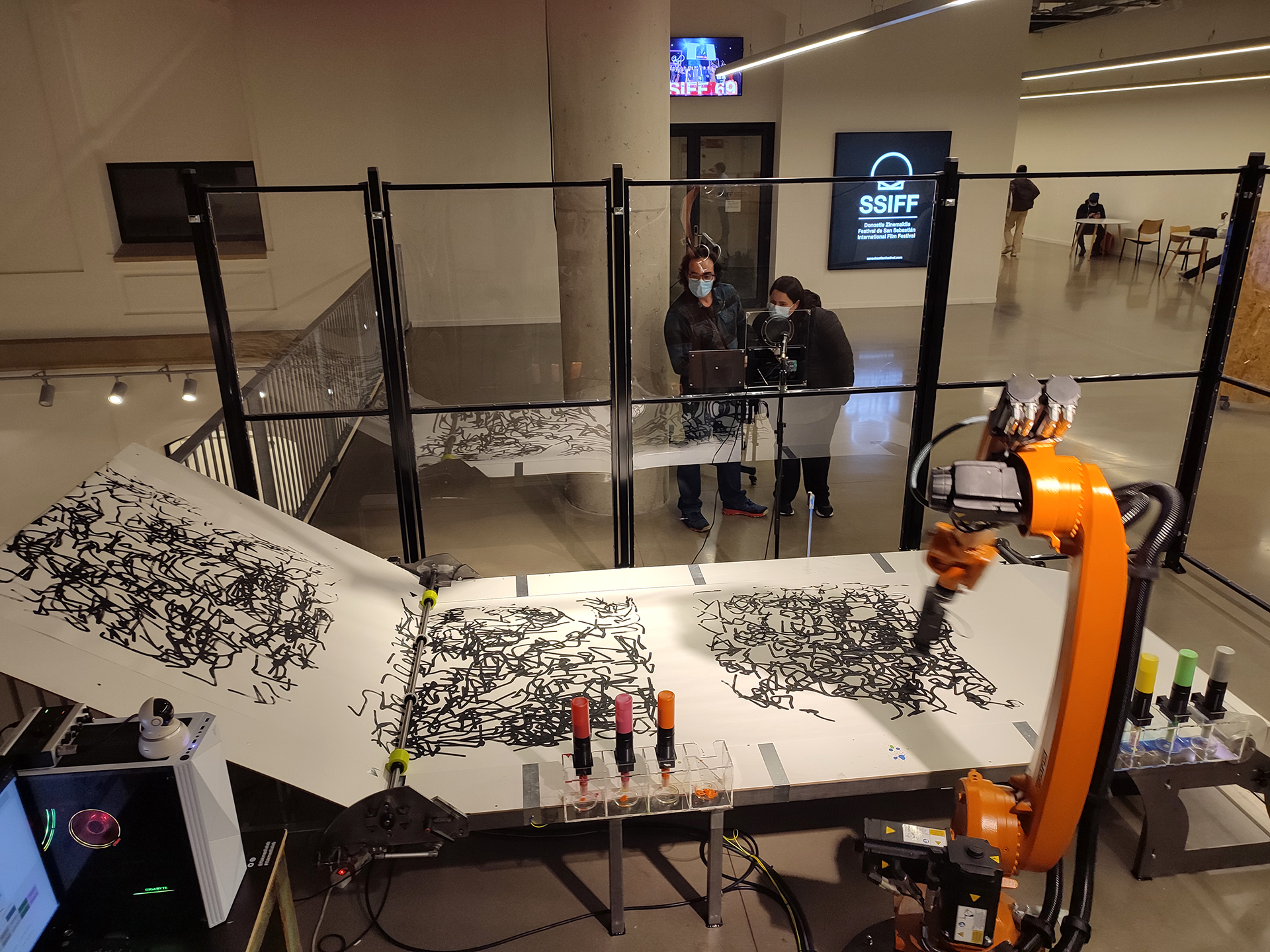
Fig. 1 Audience talking with the robot while it's drawing dreams
Conversations with Bina48 is different but related. It uses dialogue instead of images. Through back-and-forth conversations, Stephanie Dinkins tries to build up a long-term friendship with a humanoid robot. She has been treating Bina48 as a living creature in other life-forms from the very first conversation, and their conversations so far have covered topics like emotions, identities, family, faith, civil rights, etc. The conversations are Surprisingly philosophical and throughout the process, audience could even tell the way and what topics Bina48 would like to talk about. This process raises interesting inquiry about how consciousness grows within a form from human.
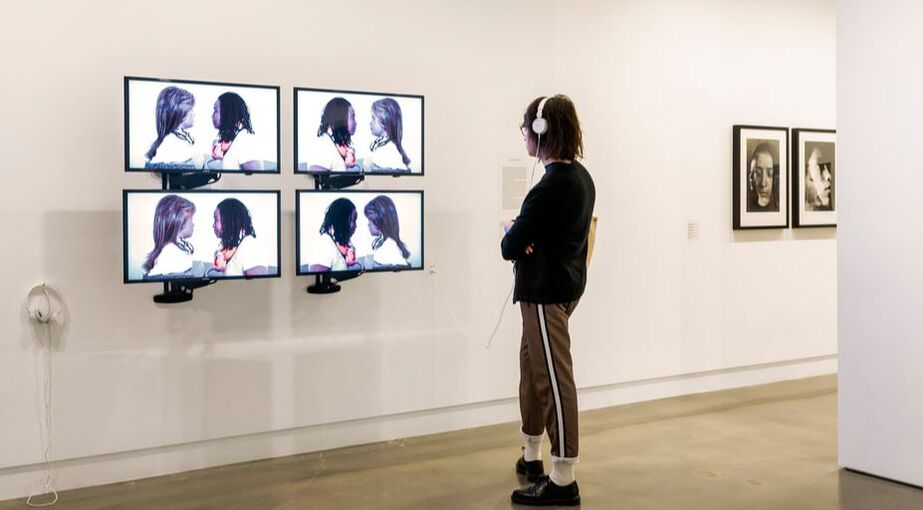
Fig.2 Audience listening to conversations between 2 friends
Dream Painter asks whether machines can understand or represent something close to human unconsciousness. It takes spoken language and transforms it into text, and then into images using CLIPDraw. The resulting drawing is not realistic but abstract—made from multicolored, moving lines that slowly organize themselves on the screen. The system seems to “interpret” what the user says, but of course it does not understand the dream or the emotion behind the words. Instead, meaning emerges through the interaction: the user projects their own inner imagery onto the evolving lines, while the machine performs a kind of algorithmic intuition. This makes the artwork feel like a collaboration between human imagination and machine emergence.
Fig. 1 Audience talking with the robot while it's drawing dreams
Conversations with Bina48 is different but related. It uses dialogue instead of images. Through back-and-forth conversations, Stephanie Dinkins tries to build up a long-term friendship with a humanoid robot. She has been treating Bina48 as a living creature in other life-forms from the very first conversation, and their conversations so far have covered topics like emotions, identities, family, faith, civil rights, etc. The conversations are Surprisingly philosophical and throughout the process, audience could even tell the way and what topics Bina48 would like to talk about. This process raises interesting inquiry about how consciousness grows within a form from human.
Fig.2 Audience listening to conversations between 2 friends
-
lpfreiburg
- Posts: 9
- Joined: Wed Oct 01, 2025 2:20 pm
Re: wk7 11.04/11.06: Digital Object | Digital Fabrication, Robotics | Automation
Looking at four of this week's examples, these four works, Antonio Somaini's academic essay "Algorithmic Images" (2023), Max Dean's Robotic Chair (2006), and Varvara & Mar's installations A Needle in a Haystack (2024) and Dream Painter (2021), range from theoretical scholarship to practical art. They provide different insights into how robotics, automation, and machine vision relate to human experiences. Somaini's essay establishes a conceptual framework. It outlines how deep learning algorithms have transformed image capture, generation, and perception since the early 2010s. He argues that machine vision creates a new kind of automated visual perception. This shifts the focus from the human viewpoint and reorganizes what we can see. His analysis includes convolutional neural networks for classification, generative adversarial networks for making images, and diffusion models for turning text into images. He examines how these technologies alter our connection to visual culture. A key point in his work is "latent space," the abstract space where deep-learning systems encode and manipulate representations. He argues that to understand today's culture influenced by these algorithms, we must confront this complex mathematical landscape. His work also highlights the political aspects of training datasets, citing studies that show political factors shape the structure of training sets.
In contrast to Somaini's theoretical ideas, Max Dean's Robotic Chair presents an early approach to robotics and machine vision. This sculpture, created in partnership with engineer Raffaello D'Andrea and industrial designer Matt Donovan, can fall apart and then reassemble itself. It has a robot integrated into the seat and a computerized vision system. The work carries a clear metaphor: the chair symbolizes the cycle of falling and getting back up, falling apart and putting ourselves together repeatedly. This suggests that robotics is not about intelligence, but about reflecting on existence. Here, machine vision serves only a practical role (localization and reassembly) rather than the analytical or creative roles typical of today's AI systems. Created after two decades of Dean's work in kinetic sculpture, this piece predates the current AI trend, reminding us that robotic art has origins in mechanical traditions that existed long before neural networks and latent spaces.
Varvara & Mar's two installations show how the same artistic approach can critique and explore AI systems. A Needle in a Haystack takes a critical and somewhat sarcastic view of tech hype. A robot in the center of a haystack attempts the impossible task of finding a needle, prompting reflections on the limits of technology. The artists challenge popular views about AI, citing critics who argue that AI is neither truly artificial nor intelligent, labeling it "artificial artificial intelligence" that depends on underpaid crowd workers. In contrast, Dream Painter uses AI in a generative way rather than a critical one. This interactive installation transforms the audience's spoken dreams into collective paintings using machine learning. Referencing Freud's idea that dream interpretation is the key to understanding the unconscious, the piece positions the machine as a kind of mechanical psychoanalyst. It raises questions about whether algorithms can grasp our unconscious thoughts and what limits we should place on our trust in relationships with technology. While the haystack installation highlights AI's shortcomings, the dream painting explores its creative potential, though both maintain a philosophical skepticism about the promises of technology.
Several key tensions emerge across these works. The question of autonomy versus collaboration runs throughout. Somaini notes that even the most advanced outputs from generative adversarial networks and diffusion models come from complex interactions between artists, programmers, algorithms, and training data; authorship is fundamentally shared. Dream Painter embodies this collaborative model directly, while the Robotic Chair's self-reassembly might initially suggest autonomy. However, it is ultimately a closed, scripted loop rather than a trustworthy agency.
The tension between critique and use also proves interesting. Needle in a Haystack and Somaini's essay share a critical perspective grounded in scholarship on AI's political aspects, while Dream Painter leans into AI's creative potential. It questions whether that trust is justified. The Robotic Chair avoids these debates altogether, belonging to an earlier time when "machine vision" meant something closer to industrial sensing than semantic understanding.
A common theme across all four works is the question of visibility and invisibility through technology. Somaini discusses how machine-vision technologies increasingly operate without producing images visible to human eyes. Needle in a Haystack makes the search process painfully visible as a spectacle. Dream Painter reveals the invisible (dreams) through robotic painting, while the Robotic Chair shows its own method of disassembly and reconstruction.
Together, these four works provide a rich view of how artists and theorists have dealt with robotics, automation, and machine vision across different historical moments and from various fields. Somaini offers the conceptual terms, latent space, algorithmic images, and operational images, while the three artworks explore different experiments with these ideas. Dean's chair reminds us that robotic art has roots predating current AI discussions, operating through the mechanical traditions of kinetic sculpture rather than neural networks. Varvara & Mar's two pieces show how the same artistic practice can produce both critique and exploration, reflecting the genuine ambivalence many feel toward these technologies. What connects them is a shared concern with the boundaries between human and machine perception, agency, and meaning-making. As Somaini suggests, we need to address these questions before these changes become invisible infrastructure embedded so deeply in our daily lives that we can no longer see or question them.
In contrast to Somaini's theoretical ideas, Max Dean's Robotic Chair presents an early approach to robotics and machine vision. This sculpture, created in partnership with engineer Raffaello D'Andrea and industrial designer Matt Donovan, can fall apart and then reassemble itself. It has a robot integrated into the seat and a computerized vision system. The work carries a clear metaphor: the chair symbolizes the cycle of falling and getting back up, falling apart and putting ourselves together repeatedly. This suggests that robotics is not about intelligence, but about reflecting on existence. Here, machine vision serves only a practical role (localization and reassembly) rather than the analytical or creative roles typical of today's AI systems. Created after two decades of Dean's work in kinetic sculpture, this piece predates the current AI trend, reminding us that robotic art has origins in mechanical traditions that existed long before neural networks and latent spaces.
Varvara & Mar's two installations show how the same artistic approach can critique and explore AI systems. A Needle in a Haystack takes a critical and somewhat sarcastic view of tech hype. A robot in the center of a haystack attempts the impossible task of finding a needle, prompting reflections on the limits of technology. The artists challenge popular views about AI, citing critics who argue that AI is neither truly artificial nor intelligent, labeling it "artificial artificial intelligence" that depends on underpaid crowd workers. In contrast, Dream Painter uses AI in a generative way rather than a critical one. This interactive installation transforms the audience's spoken dreams into collective paintings using machine learning. Referencing Freud's idea that dream interpretation is the key to understanding the unconscious, the piece positions the machine as a kind of mechanical psychoanalyst. It raises questions about whether algorithms can grasp our unconscious thoughts and what limits we should place on our trust in relationships with technology. While the haystack installation highlights AI's shortcomings, the dream painting explores its creative potential, though both maintain a philosophical skepticism about the promises of technology.
Code: Select all
| Work | Stance on AI/Robotics | Machine Vision Role | Human Agency |
|------|----------------------|---------------------|--------------|
| Somaini | Analytical/critical | Central—as an epistemological (theory of Knowledge) and political problem | Decentered but authorship "distributed" |
| Robotic Chair | Mechanistic/metaphorical | Functional (localization for reassembly) | Strongly present—metaphor for human resilience |
| Needle in a Haystack | Skeptical/satirical | Object of critique—exposes technological limits | Emphasized through contrast with machine failure |
| Dream Painter | Exploratory/ambivalent | Generative (speech-to-image synthesis) | Collaborative—human dreams as creative input |The tension between critique and use also proves interesting. Needle in a Haystack and Somaini's essay share a critical perspective grounded in scholarship on AI's political aspects, while Dream Painter leans into AI's creative potential. It questions whether that trust is justified. The Robotic Chair avoids these debates altogether, belonging to an earlier time when "machine vision" meant something closer to industrial sensing than semantic understanding.
A common theme across all four works is the question of visibility and invisibility through technology. Somaini discusses how machine-vision technologies increasingly operate without producing images visible to human eyes. Needle in a Haystack makes the search process painfully visible as a spectacle. Dream Painter reveals the invisible (dreams) through robotic painting, while the Robotic Chair shows its own method of disassembly and reconstruction.
Together, these four works provide a rich view of how artists and theorists have dealt with robotics, automation, and machine vision across different historical moments and from various fields. Somaini offers the conceptual terms, latent space, algorithmic images, and operational images, while the three artworks explore different experiments with these ideas. Dean's chair reminds us that robotic art has roots predating current AI discussions, operating through the mechanical traditions of kinetic sculpture rather than neural networks. Varvara & Mar's two pieces show how the same artistic practice can produce both critique and exploration, reflecting the genuine ambivalence many feel toward these technologies. What connects them is a shared concern with the boundaries between human and machine perception, agency, and meaning-making. As Somaini suggests, we need to address these questions before these changes become invisible infrastructure embedded so deeply in our daily lives that we can no longer see or question them.